What does it mean when a dog destroys things at home?
Destructive behaviour describes actions that damage household objects: chewing table legs, tearing fabric or scratching doors. It describes the outcome, not a single underlying cause. Chewing itself is a natural dog behaviour; it becomes a problem when the target is unsafe or off limits.
It can happen with people at home or while they are away. A puppy may grab accessible objects while exploring, whereas an adult dog may cause damage after someone leaves or after something exciting or unsettling happens. What happened beforehand and when the damage occurred matter as much as the damaged object.
Rather than looking for one solution to every incident, start with your dog’s age, daily routine and circumstances. Below, we work through possible causes, observation, a safer home and teaching alternative behaviours.
Why do dogs destroy things? Look at the context
Damage is an outcome, not a diagnosis. Chewing the same piece of furniture might involve exploration, seeking an activity, reacting to a noise or struggling with separation. A sudden change also calls for consideration of the dog’s health.
Puppies and young dogs: exploring their world
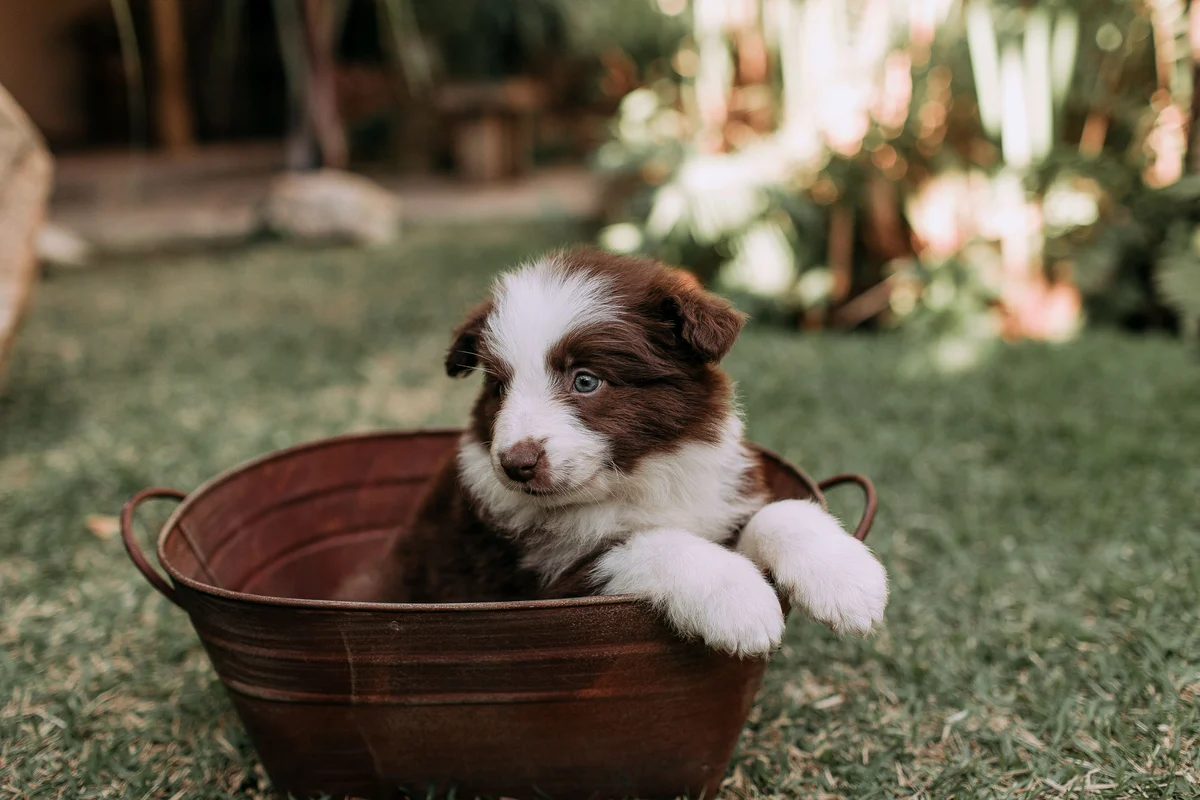
Chewing is normal behaviour and may increase during teething. A puppy does not know the value of a shoe or the difference between a chair leg and a toy. They need supervision, suitable alternatives and a consistently prepared environment.
Too few suitable activities, or too much excitement
Look at the whole day: walks, sniffing, time with people and undisturbed rest. Adding more running after every incident is not a plan. Note which activities are followed by rest and when your dog keeps wandering around looking for something to do.
Food, smells and easy access
If the main targets are food wrappers and the bin, start by blocking access. Do not leave a test of willpower on the counter. In practice, this means a bin behind a closed cupboard door, clear worktops and the same rules for everyone at home.
Fear, frustration or discomfort
Scratching doors and trying to escape need a different response from quietly chewing a slipper. Check whether the trigger is your departure, being shut in a room, a noise outside or another event. Video offers more useful information than guessing from the damage.
An observation diary: five details instead of a “naughty” label
Start with a short note you can compare with the next one. Do not provoke destruction to collect evidence. If you have a recording of a normal absence, watch the beginning and periods of rest as well as the chewing itself.
- When: with people at home or after departure, and at what time?
- What: doors, furniture, clothes, rubbish or a range of objects?
- What came before: a walk, noise, play or a closed door?
- What else: relaxed chewing, pacing, panting or vocalising?
- Recovery: did your dog settle independently, or did someone’s presence help?
What should you do when you find damage?
Check your dog first, then your home. Secure the remains and look for missing pieces of toys, fabric, packaging or cables. Photograph the damaged item: if you suspect swallowing, this can help you explain to the vet what may have gone into your dog’s mouth.
- Move your dog somewhere familiar and safe while you clear up.
- Put cables, medicines, cleaning products, plants and small objects out of reach.
- Record how long you were away and what was damaged.
- Do not punish your dog when you return: it will not teach them what to do next time.
Puppy chewing furniture? Prepare your home and teach an alternative
Prevention is part of learning. Put shoes away, block access to cables and prepare a resting area. A gate or separated part of a room can help only if the dog feels safe there; do not introduce confinement for the first time just before a long absence.
Choose chewing items for your dog’s size and chewing style. Supervise the first use of any new toy. If pieces are torn off and swallowed, safely remove it and discuss alternatives with a vet or qualified professional. An “indestructible” label cannot replace observation.
- Offer an appropriate toy before your puppy turns to the furniture.
- Calmly guide them to a suitable activity and reward the choice.
- Practise swaps with low-value items instead of chasing a stolen sock.
- If your dog stiffens or growls over an object, do not force it away: seek individual support.
Your dog destroys things when left alone
Destruction alone does not confirm separation anxiety. Look at the wider picture: persistent howling, panting, drooling, pacing, escape attempts or an inability to rest. Share recordings with your vet and a professional experienced in separation-related problems.
Do not leave your dog to cry it out. Learning to be alone should start at a level where they still feel comfortable. There is no universal schedule for increasing time. If worry appears, that step is too difficult and needs to be made easier.
A crate does not treat anxiety. A dog trying to escape confinement may injure themselves. A food toy is also insufficient if distress prevents the dog from using it. The plan needs to address emotions, the environment and how absences are managed.
When can a sitter visit help, and when is longer company needed?
A visit can break up a long day without human company. For a puppy, it also offers a toilet break and care at an agreed time. But consider the periods before and after the visit: booking one appointment does not cover the entire day.
If your dog panics as soon as you leave, a short visit hours later does not solve that problem. Discuss company throughout your absence and check whether another person’s presence actually helps. A sitter supports daily care arrangements but does not replace behavioural treatment.
How to teach alternatives without punishment
Reward the behaviour you want to see more often. Notice when your dog chooses their own toy or rests in the prepared space. Do not wait for an incident to offer attention. Everyone at home should follow the same simple plan.
- Prepare: remove the tempting object and make a safe alternative accessible.
- Practise briefly: work on toy choices or swaps when your dog is calm.
- Reward: acknowledge the choice and offer something your dog enjoys.
- Review: check whether supervision becomes easier and your dog settles more readily.
Shouting, frightening and physical punishment do not explain the rules. Do not push your dog’s face towards the damaged item or use aversive collars. Reward-based methods follow AVSAB’s current position on humane dog training.
Your first dog? Build a clearer foundation
A plan for the coming week: observe, adjust, compare
This is an organisational plan, not a promise to resolve the problem in seven days. Do not wait until the week is over to seek help for pain, swallowed objects or panic.
- Start: secure your home, record situations and agree on household rules.
- Over the next few days: try one environmental change and a short exercise suited to your dog.
- Before each departure: arrange company for the time your dog cannot yet comfortably manage alone.
- At the end of the week: compare notes on rest and tension as well as the number of damaged objects.
No new damage does not always mean your dog feels better. Furniture might be inaccessible while distress continues. The goal is a safe home and a dog who feels comfortable there, including during the amount of alone time they can currently manage.
When should you seek individual help?
Start with your vet for a sudden behaviour change or suspected pain. Repeated escape attempts, intense distress, injuries or swallowing objects require a plan for the individual dog. Look for a reward-based professional who works with a veterinarian.
Bring recordings, a list of damaged items, the daily schedule and details of what you have tried. Note practical constraints too: working hours, available care and safe resting places. This helps focus the discussion on changes you can actually implement at home.
Frequently asked questions
Is my dog destroying things out of spite?
Do not treat damage as evidence of revenge. Investigate needs, emotions and circumstances. A dog’s response to your anger does not prove they understand punishment for something they did earlier.
Will a second dog solve the problem?
There is no guarantee. Do not choose another animal as treatment for the first. Establish what your dog finds difficult and whose presence, if anyone’s, makes a difference.
Is a longer walk before leaving enough?
A walk can be part of a good day but does not replace work on anxiety. Match activity to health and age, allow rest and observe the reaction to your actual departure.
How long does it take to stop destructive behaviour?
There is no single deadline. Securing a bin can happen immediately; changing feelings about separation requires an individual pace. Judge progress by your dog’s behaviour, not a promised number of days.
Sources and scope
Based on material from Merck Veterinary Manual, VCA Animal Hospitals, Dogs Trust, RSPCA, Blue Cross, ASPCA and AVSAB’s humane training position. This guide helps organise observations and does not diagnose your dog. The weekly plan and diary entry are editorial examples.